Why ‘STEM Alone’ Misses the Mark—And Why the ‘A’ in STEAM Matters
Somewhere along the way, “STEM” became a magic word.
Parents hear it and think: future-proof.
Schools say it and mean: rigor.
Programs advertise it and imply: your child will be ready for tomorrow.
But here’s the point of view I want to plant firmly in the ground:
STEM alone is not enough—especially for elementary-age kids.
Because kids don’t just need to learn skills. They need to learn meaning. And meaning is where the “A” in STEAM changes everything.
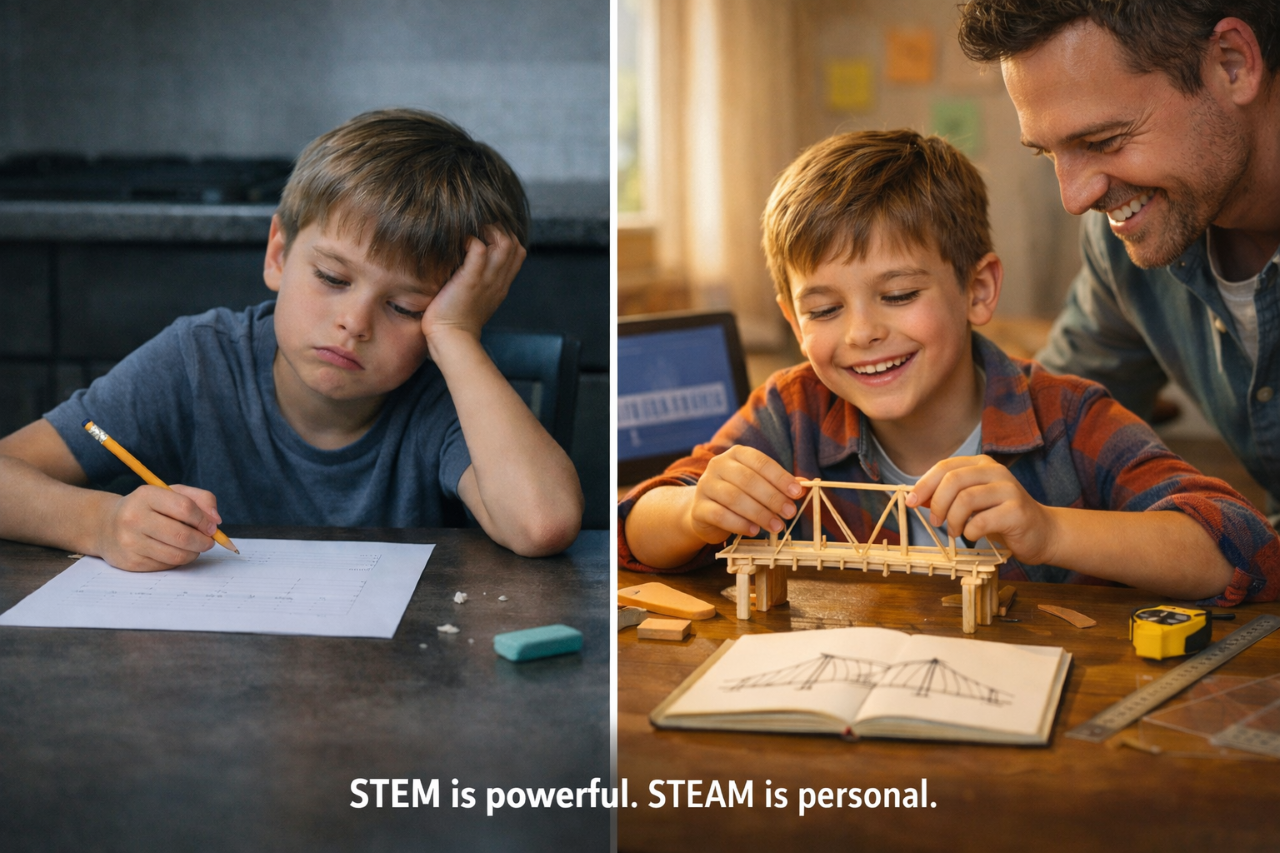 At Impact STEAM Academy (ISA), we’ve seen it up close: when you add Art, you don’t “soften” learning—you supercharge it. You take math from “something I have to do” to “something I can use.” You take science from “facts to memorize” to “questions I want to explore.” You take engineering from “hard” to “I can try, fail, improve, and try again.”
And for the parents we serve—parents who want the best education for their children but aren’t sure how to help at home—this matters more than most people realize.
Because your child’s biggest challenge usually isn’t intelligence.
It’s motivation.
STEM Teaches The “What.” STEAM Teaches The “Why.”
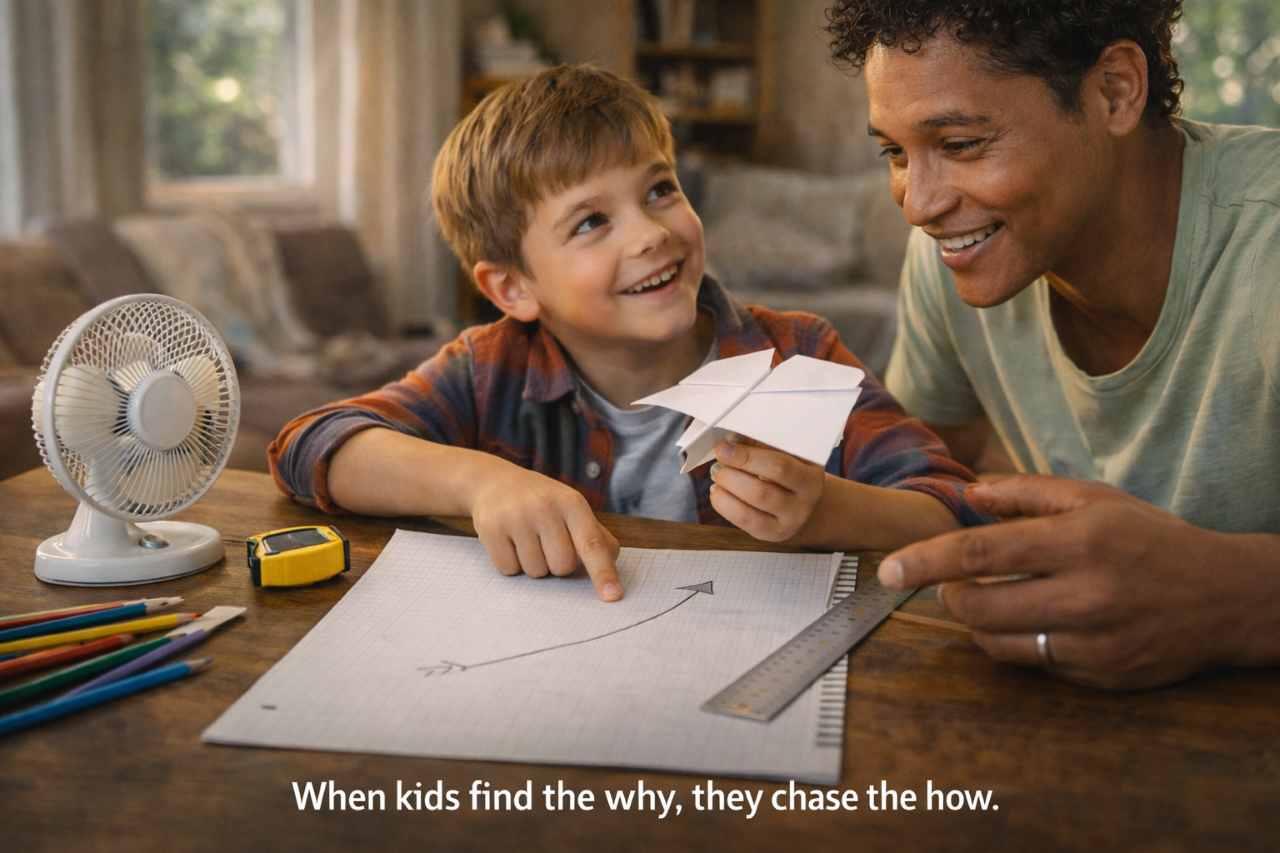
Let’s be honest about what many kids experience:
· Math feels like random rules.
· Science feels like vocabulary words.
· Technology feels like “press the right button.”
· Engineering feels like something “other kids” do.
So, when a child says, “Why do I need to learn this?” they’re not being difficult. They’re being logical.
If they don’t see a purpose, they won’t push through confusion.
If they don’t feel connected, they won’t stay curious.
If they don’t believe they can succeed, they’ll stop trying.
This is why “STEM alone” can miss the mark.
Because STEM can accidentally become worksheet learning with a cooler label—more drills, more pressure, more “right answers,” and more anxiety. And the kids who struggle most with confidence? They’re the first to check out.
But STEAM creates an on-ramp. Art invites children into the work through creativity, imagination, and personal expression—three things kids naturally have in abundance.
Art says:
- “You can show your thinking.”
- “You can build your idea.”
- “You can solve this your way.”
- “You can try again.”
That’s not fluff. That’s the foundation of real learning.
The “A” Is Where Confidence Is Built
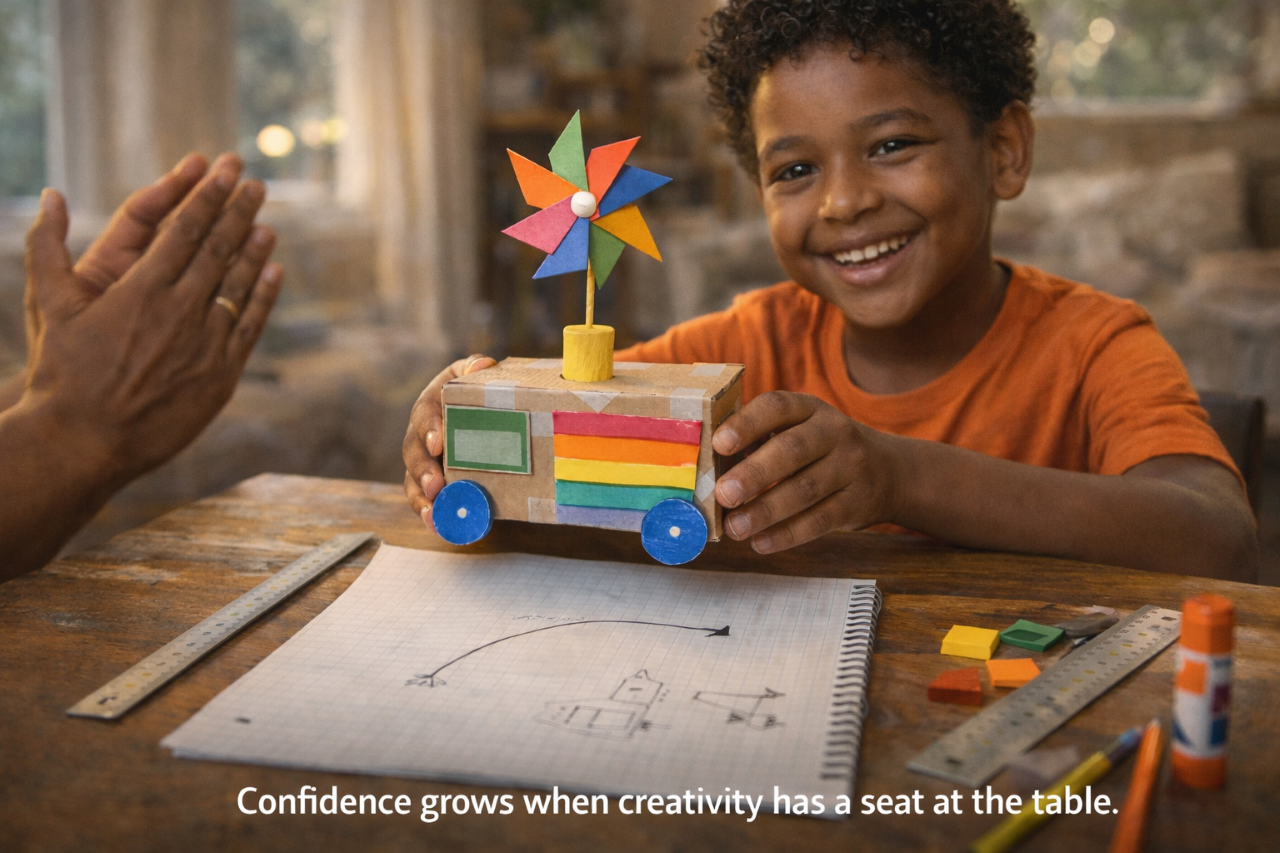
Here’s what happens when Art is present:
A child who freezes on a math page will design a blueprint.
A child who hates word problems will build a model.
A child who says “I’m not smart” will light up when they create something that works.
Why?
Because creativity gives them a place to start.
When kids engage in art-driven problem solving—drawing, designing, building, testing, improving—they’re no longer chasing perfection. They’re exploring. And exploration builds confidence far faster than correction ever will.
At ISA, we intentionally use hands-on, interactive learning powered by the engineering design process:
Ask. Imagine. Plan. Create. Improve.
That process is more than a method. It’s a mindset.
- Ask: What’s the challenge? What do we need to know?
- Imagine: What ideas could work?
- Plan: What steps should we take?
- Create: Let’s build it and try it.
- Improve: What didn’t work? What can we adjust?
Do you see what’s quietly happening there?
Your child is learning how to think.
Not just how to answer.
Real-World Learning Needs Creativity, Not Just Correctness
 The careers of tomorrow won’t reward kids for being the fastest at filling in bubbles.
They’ll reward kids who can:
- Solve open-ended problems,
- Collaborate with others,
- Communicate their thinking,
- and Create new solutions.
Those are not “extra” skills. Those are the skills.
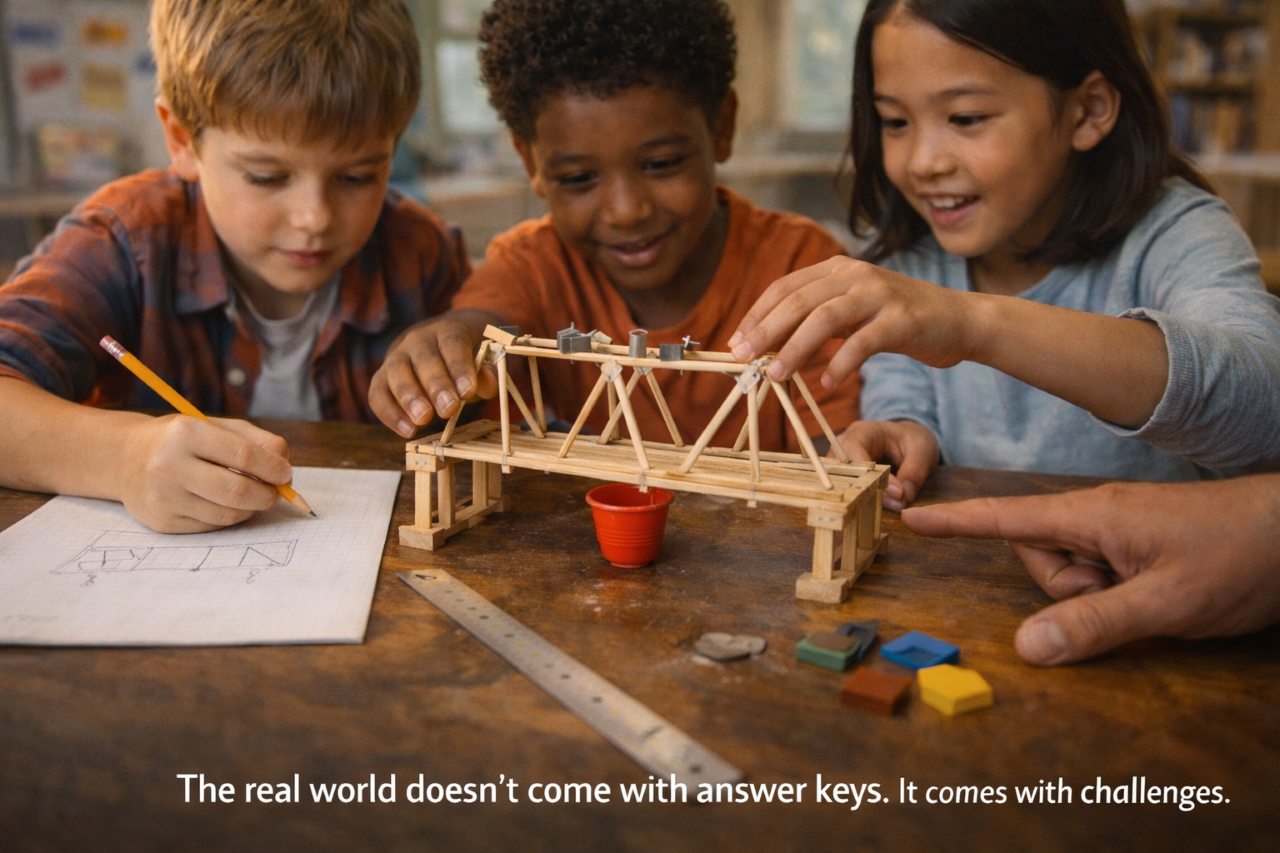
And that’s why ISA uses project/problem-based challenges connected to science-related monthly themes—because the world doesn’t hand you problems with only one correct answer.
In real life, there are multiple solutions. Multiple approaches. Multiple ways to improve.
STEAM mirrors reality.
A child might design a bridge with popsicle sticks (engineering), measure weight capacity (math), test materials (science), use digital tools to model it (technology), and decorate it or redesign the structure for beauty and function (art).
That last part—the artistic redesign—isn’t decoration.
It’s iteration. It’s communication. It’s user experience. It’s innovation.
Art is what turns “I built a thing” into “I solved a problem for someone.”
The “A” Helps Children Who Don’t Care… Start Caring
If your child “doesn’t see the point” of school, listen closely:
They don’t need more pressure.
They need more connection.
 Art creates connection because it links learning to identity and interest.
A child who loves sports can explore math through stats, scoring averages, and angles.
A child who loves games can explore patterns, probability, and strategy.
A child who loves art can explore geometry, symmetry, scaling, and measurement.
A child who loves cooking can explore fractions, ratios, time, and temperature.
This is one of ISA’s core beliefs:
Kids learn math best when they’re actively exploring, building, and solving real-world challenges—not just filling in worksheets.
Because worksheets often teach compliance. Projects teach ownership. And ownership is where motivation is born.
STEAM Also Teaches The Most Important Lesson: Struggle Is Part Of Learning
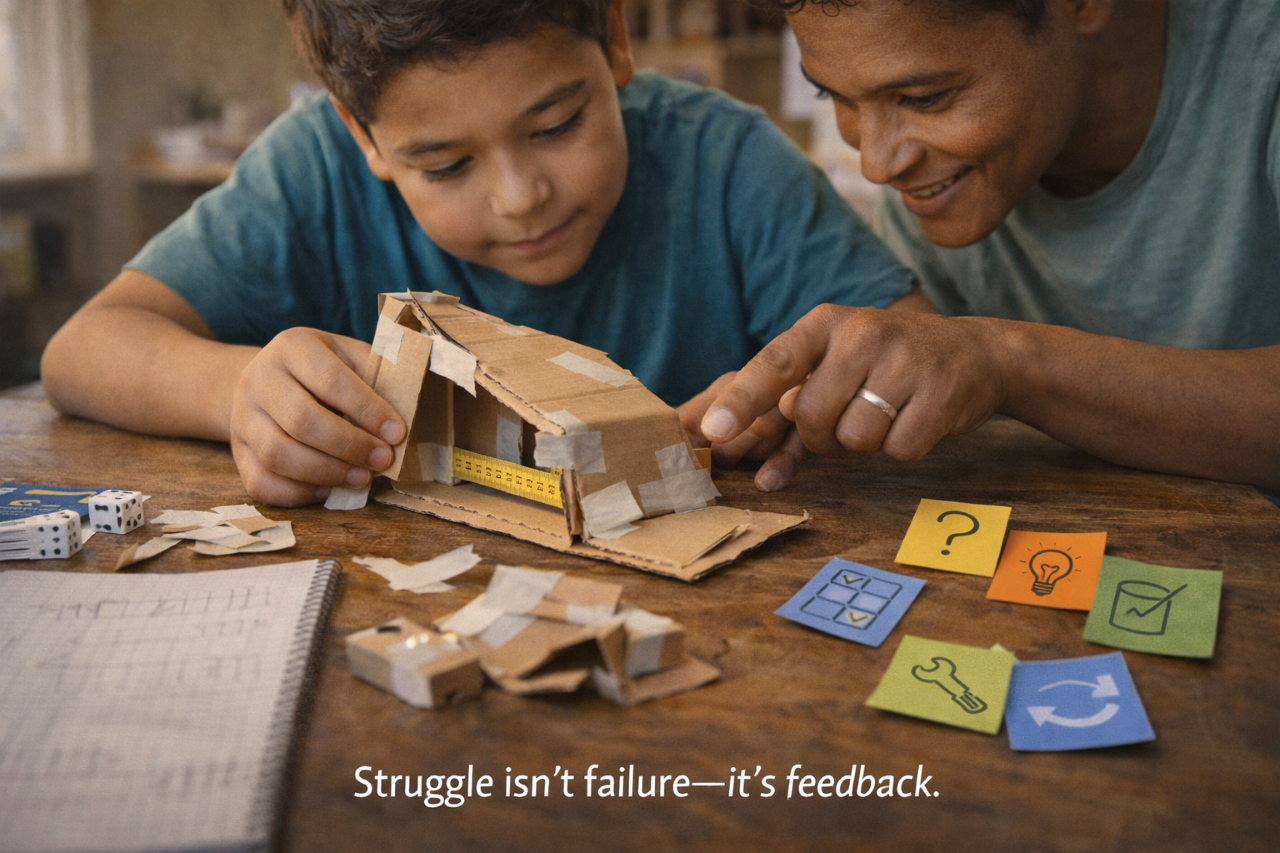 One of the greatest gifts you can give your child is not a perfect grade. It’s resilience.
When kids build and test and improve, they learn something powerful: “I didn’t fail. My design needs adjustment.”
That’s the growth mindset in action.
ISA is committed to equip and challenge students to reach their unique potential—and potential doesn’t show up when everything is easy. It shows up when your child learns how to stay in the challenge without quitting.
STEAM gives them permission to struggle productively.
And that matters at home too—because most parents aren’t trying to become math teachers. You’re trying to become confidence builders.
So, What Should Parents Do—Starting Now?
 You don’t need a fancy curriculum to bring STEAM into your home. You need a new lens.
Start looking at everyday moments as learning moments:
- Measuring ingredients,
- Sorting laundry,
- Building with blocks,
- Tracking screen time,
- Planning a budget for a family outing,
- Comparing prices at the store,
- Timing a race in the backyard,
- Designing a paper airplane and improving the flight.
That’s STEAM.
That’s math with meaning. That’s learning that feels like life. And when kids experience learning this way, they stop asking, “When will I use this?”
Because they’re using it.
Your Next Step: Get ISA’s 3 Power-Packed Parent Ebooks
If you want a simple, practical way to start teaching math at home—without stress, without tears, and without feeling like you’re “doing it wrong”—then you need ISA’s ebook bundle:
Get 3 Impact STEAM Academy Power-Packed Ebooks on
“How Parents Can Teach Their Child Math Skills at Home – The ISA Way.”
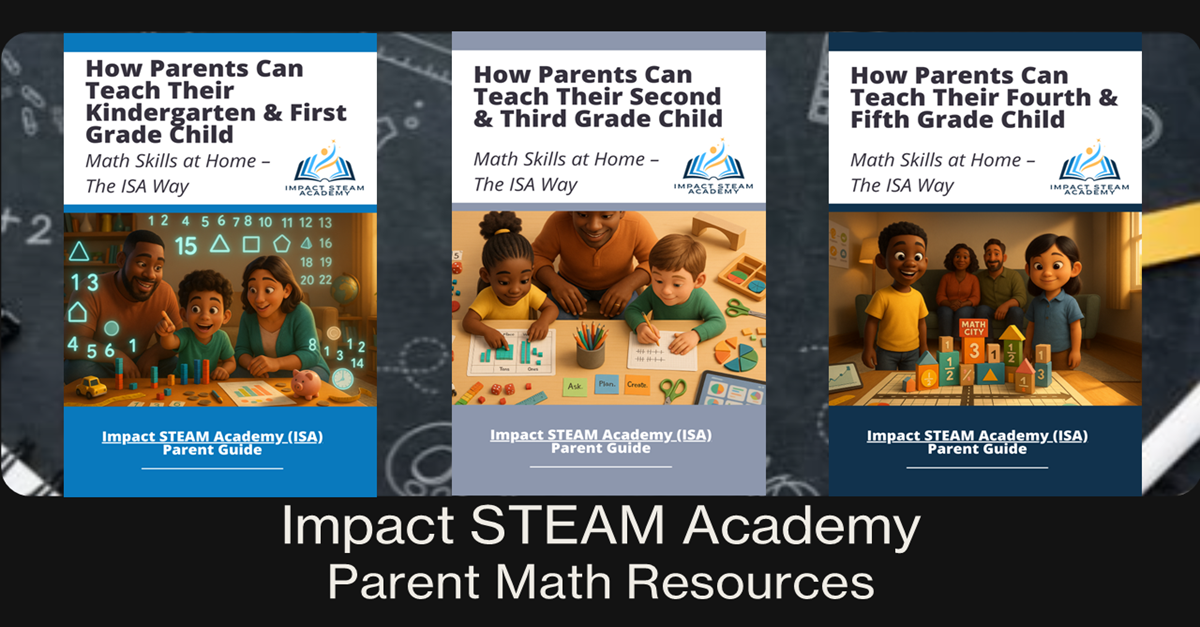 Inside these guides, you’ll discover how to:
- Use the ISA engineering design process (Ask, Imagine, Plan, Create, Improve) to make math hands-on and engaging.
- Help a child who “doesn’t see the point” connect math to what they already love—sports, games, art, cooking, and everyday life.
- Build motivation and mindset so your child sees struggle as part of learning, not proof they’re “bad at math.”
- Turn ordinary moments into powerful lessons across numbers, patterns, shapes, measurement, and data—with simple activities that build real skill and real confidence.
Because your child doesn’t need more worksheets. They need more wins.
And STEAM—especially the “A”—is how those wins begin.
How do you feel about the importance of Art in STEAM?