The Myth That Creativity and Math Don’t Mix
Let’s say the quiet part out loud: many kids think math is a rigid set of right-or-wrong answers that only “math people” get right.
Many parents, even those who want the best for their child, feel the same. They tell themselves, “My child is creative. Math just isn’t their thing.” That belief is powerful. It shapes how children see school, how they face challenges, and how they judge their own potential.
At Impact STEAM Academy (ISA), we reject that myth. We see creativity and math not as opposites, but as partners.
When children discover how ideas, patterns, and possibilities connect, motivation wakes up. Confidence grows. Effort feels worth it. And math stops being a wall—it becomes a workshop.
Creativity isn’t “Art vs. Numbers.” It’s How We Solve.
 Creativity is not only, drawing, dancing, or designing. It’s also the moment a child flips a problem around and asks, “What if I try this instead?” Creativity shows up when students connect dots nobody told them to connect. When they take a risk, test a theory, and learn from the result. That’s math. And that’s the heart of how we teach at ISA.
Think about a bridge. Engineers do art with constraints. They imagine a form, test the structure, adjust the design, and try again. A bridge is math you can walk across. The same creative cycle fuels coding an app, laying out a community garden, or designing a water filter from recycled materials. It’s the engineering design process we use daily at ISA: ask, imagine, plan, create, and improve. That cycle is creativity—and it runs on math.
Why the “Math vs. Creativity” Myth Sticks
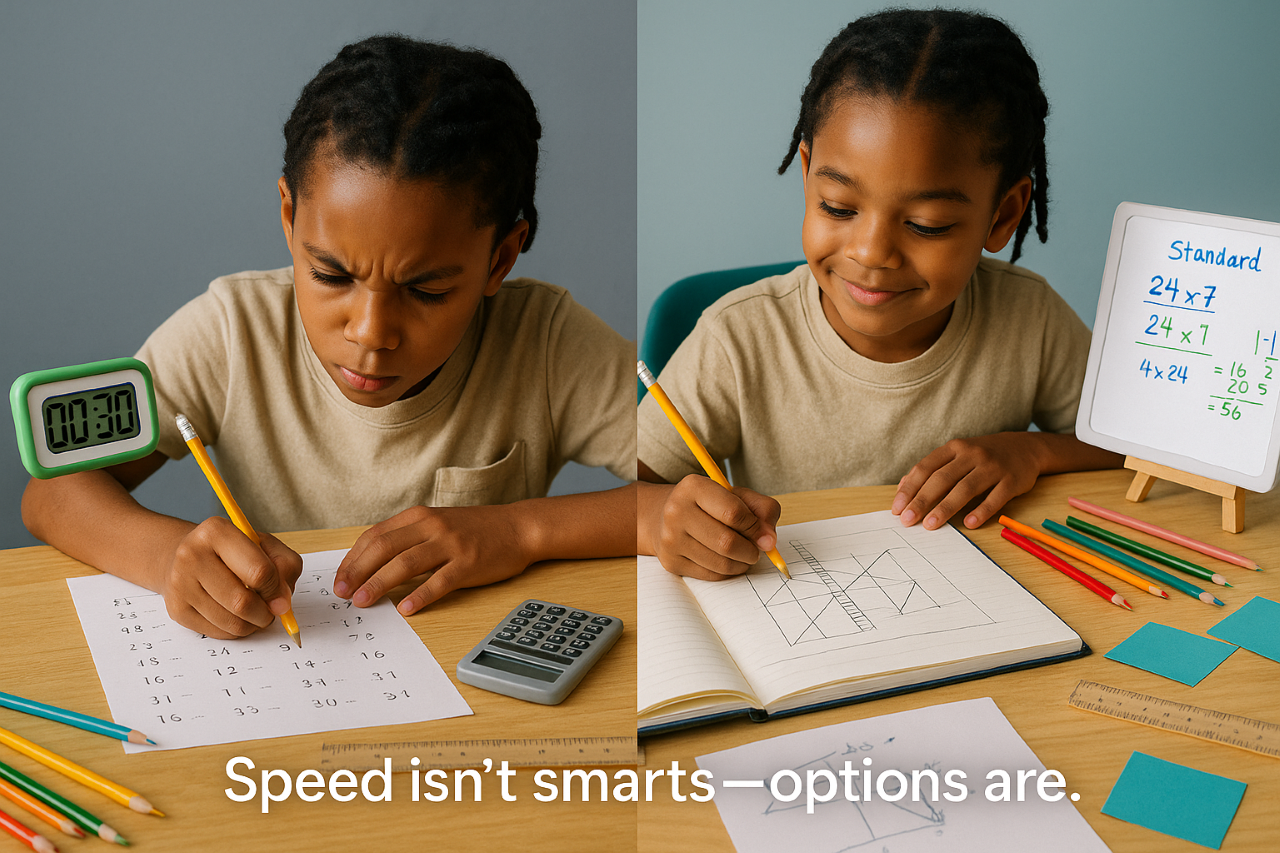 The myth sticks for three reasons:
1. Speed is confused with smarts. Timed worksheets and quick-fire drills suggest math is about racing. Many students—especially those who think carefully—learn to believe they’re “bad at math.” They aren’t. They’re just not sprinters.
2. Only one path is shown. When children see a single method and a single answer, they assume exploration is off-limits. Curiosity shuts down.
3. Relevance gets lost. If a child can’t see a purpose, the brain categorizes math as “someone else’s life.” Motivation fades.
Parents can’t fix a whole system alone. But you can choose environments that treat math as a creative, meaningful discipline. That’s what we do at ISA.
What Creativity In Math Looks Like at ISA
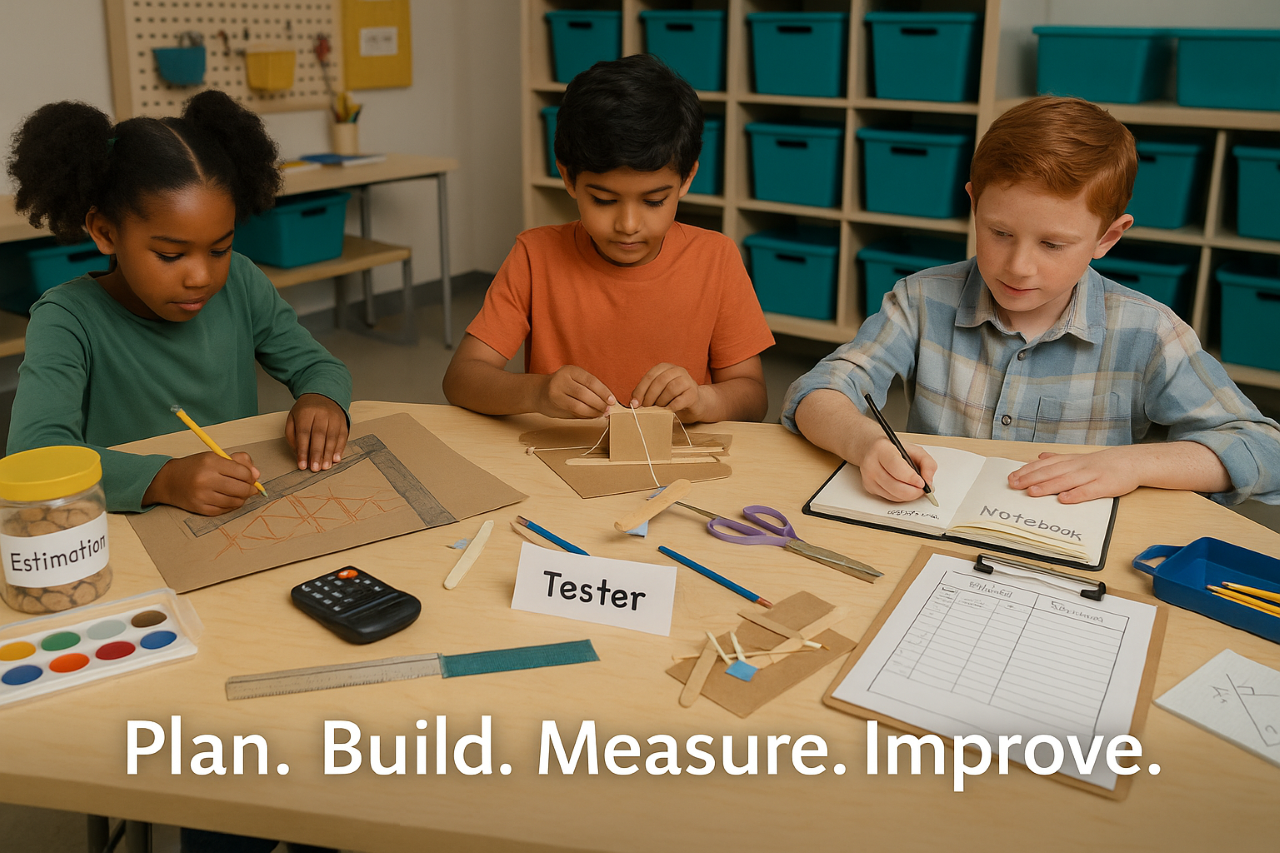 We turn math into decisions. Into design. Into “try it and see.” Here’s what that looks like in our afterschool program:
- Open-ended challenges. Instead of asking, “What is the answer?” we ask, “What’s a possible solution?” Students measure, estimate, compare trade-offs, and pick a path.
- Multiple solutions. We celebrate different strategies. One student might optimize for cost. Another for speed. A third for safety. The debate is the learning.
- Visible thinking. Students draw diagrams, label assumptions, and annotate calculations. They practice explaining why their approach works.
- Hands-on data. Kids collect real measurements, make mistakes, and learn to trust their process—not just a formula.
- Iteration, not perfection. We expect v1 to have flaws. We expect v2 to be smarter. We expect v3 to surprise us.
In short, creativity is not the “fun part” after the math is done. Creativity is how the math gets done well.
A Classroom Snapshot: “Rescue the Rover”
Here’s one challenge we love. Students receive a story: a small rover is stranded across a “canyon” (two tables with a gap). Teams have limited materials—paper, tape, string, and a few popsicle sticks—to create a delivery system that moves a battery to the rover without dropping it.
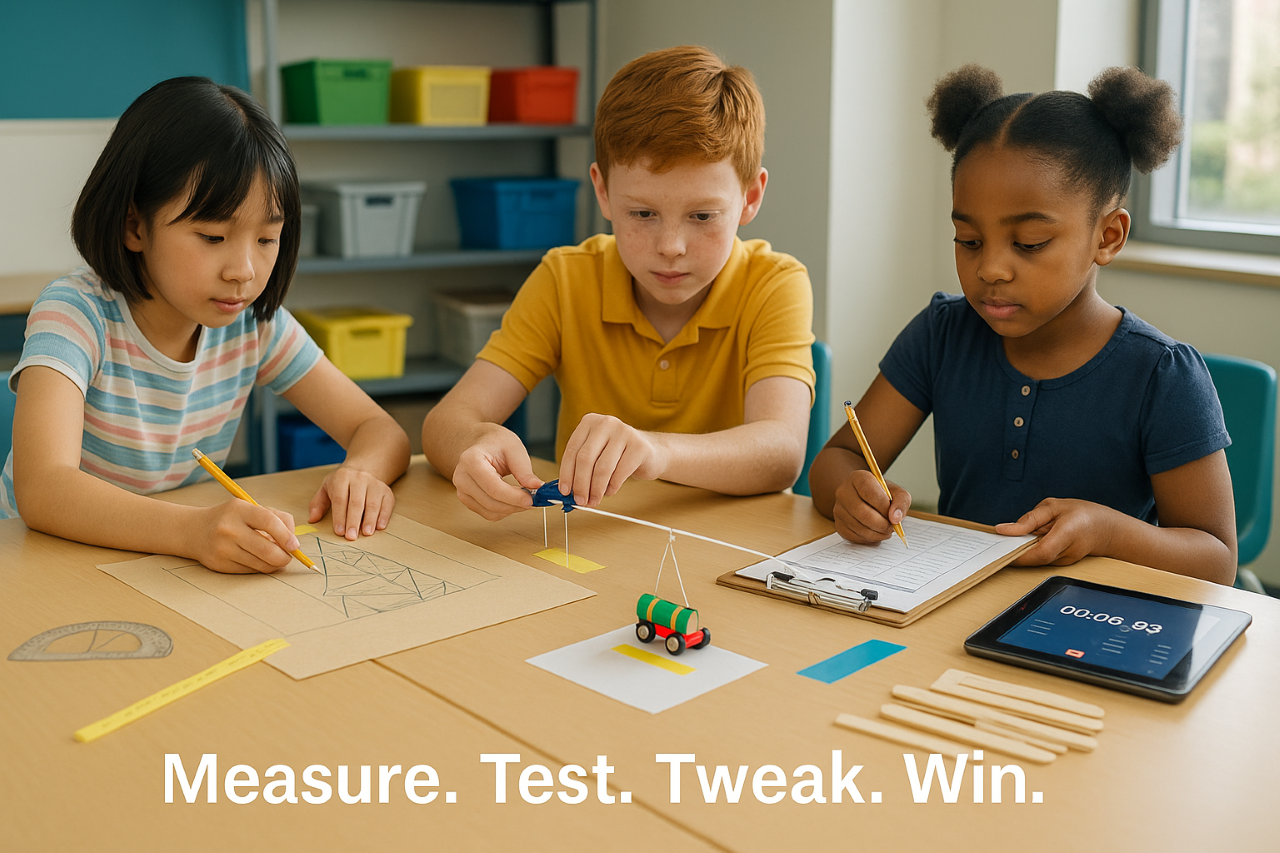 Where’s the math? Everywhere.
- Measurement: Students calculate the span and test tolerances.
- Ratios & scaling: They adjust string lengths and anchor points.
- Forces & geometry: They consider angles for a stable sling.
- Optimization: They balance weight, friction, and reliability.
- Data collection: They run trials, track outcomes, and tweak.
By the end, the room is buzzing. Some teams use a levered ramp. Others invent a pulley. A few build gliders. Each solution lives or dies on the math inside it. Kids leave proud—and hungry for the next challenge.
Motivation Grows When Students Own The “Why”
Children often ask, “When will I use this?” At ISA, they answer that question with their hands.
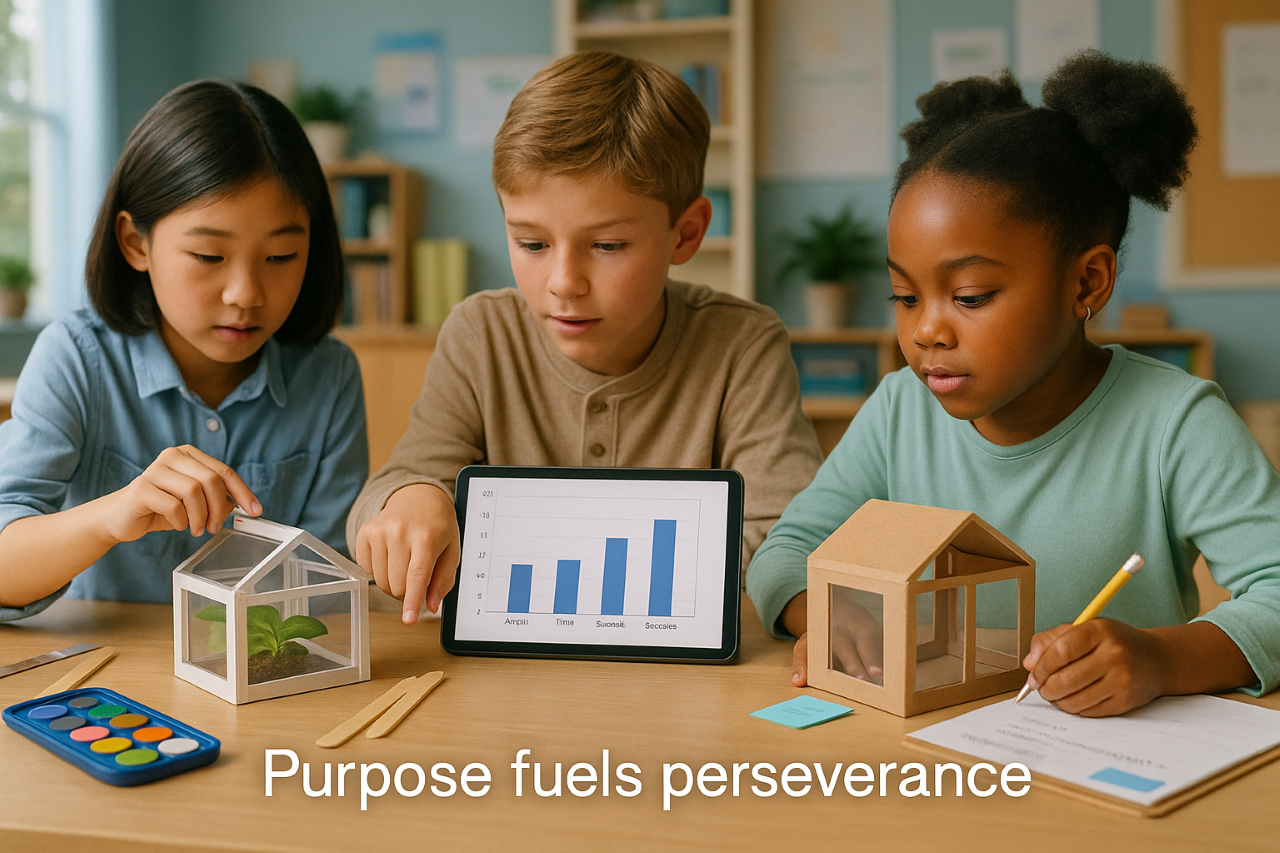 When a student designs a mini-greenhouse that keeps seedlings alive, percentage and proportion stop being abstract. When they build a cardboard boat meant to hold a classmate for five seconds, buoyancy formulas matter. When they map a campus delivery route to minimize steps, coordinate grids and distance formulas click.
We do not motivate with prizes. We motivate with purpose. Purpose fuels perseverance. Perseverance grows skill. Skill builds confidence. Confidence opens futures.
For Parents: 5 Simple Ways to Blend Creativity and Math at Home
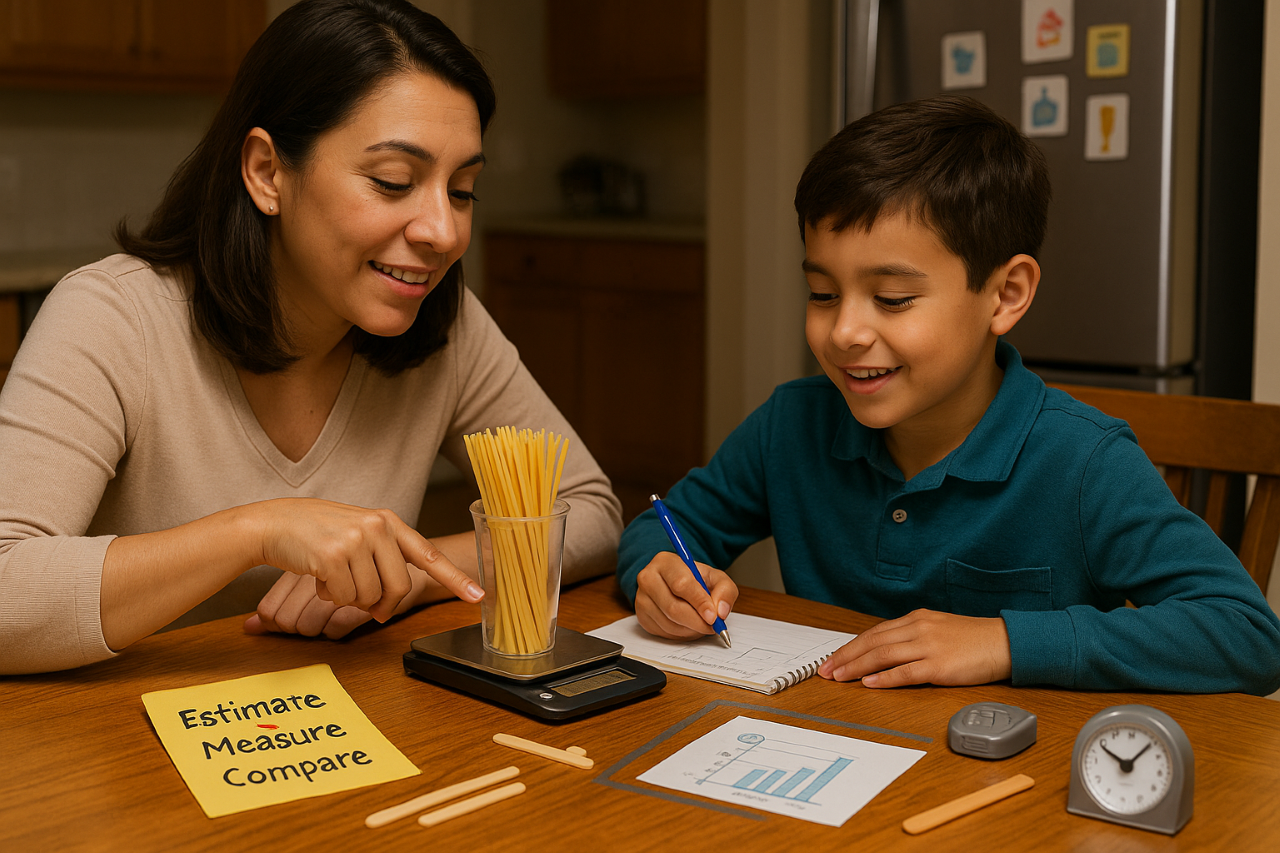 You don’t need special training to nurture this mindset. Try these:
1. Ask “How else?” When your child solves a problem, ask for a second method. Celebrate the different path even more than the answer.
2. Estimate first, then measure. Cooking, building, or sorting laundry—ask for a guess, then check. Turn error into curiosity: “What made our estimate high?”
3. Play with constraints. “Build the tallest tower with 20 cards.” “Pack a backpack with the fewest steps.” Constraints ignite creativity.
4. Trace the trade-offs. “We can get there faster by highway, but we’ll spend more gas. What’s the plan?” Invite them to define “best.”
5. Model iteration out loud. When something goes wrong at home, narrate the fix: “Version one of dinner burned. What’s our version 2? Lower heat, smaller pan, more time?”
These habits teach children that creativity is not magic. It’s method.
What About Rigor?
Parents sometimes worry that open-ended projects are “just fun” and light on substance. At ISA, rigor is non-negotiable. We align projects with standards, build vocabulary intentionally, and hold students to clear criteria: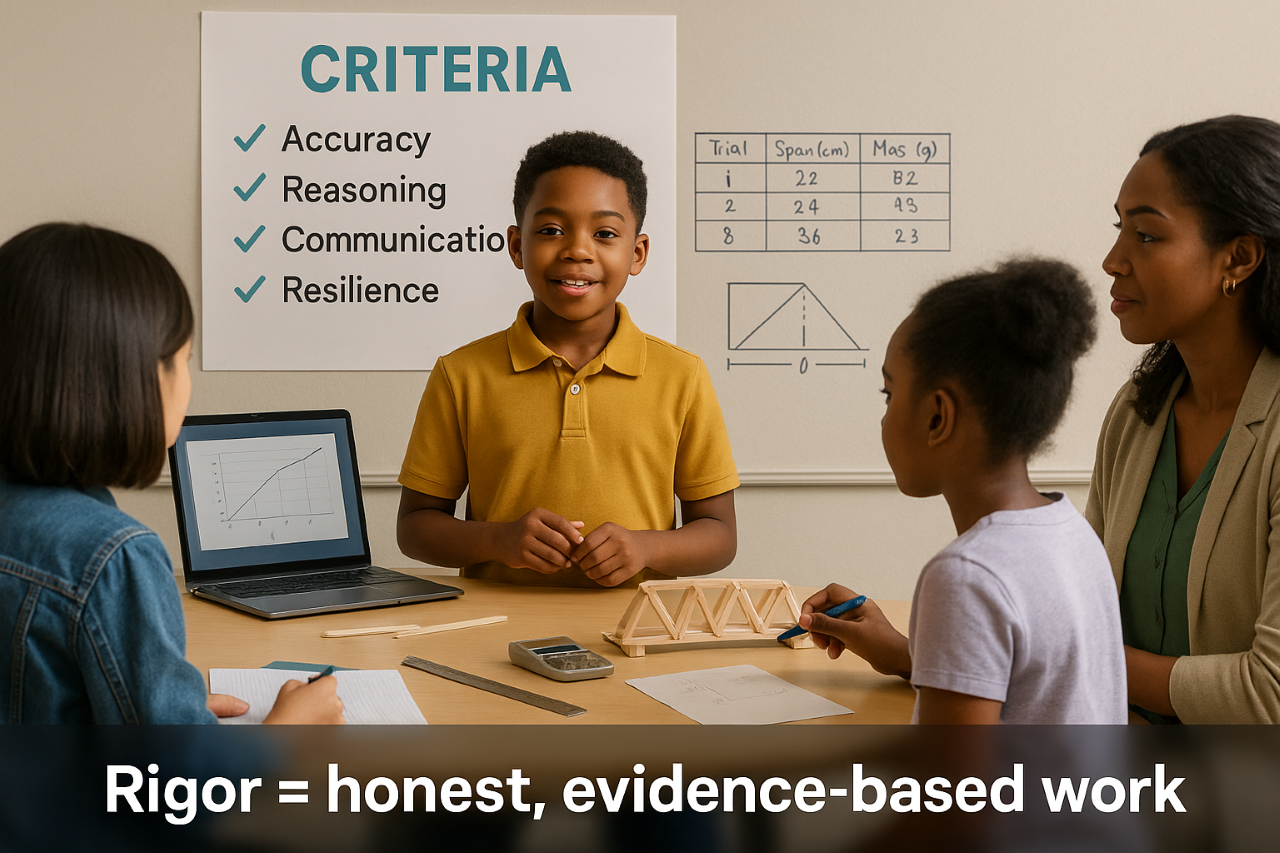
- Accuracy: Are measurements precise and recorded?
- Reasoning: Can the student explain why the design should work?
- Communication: Can they present their method clearly to peers?
- Resilience: Did they iterate based on data, not guesses?
Rigor is not about being harsh. Rigor is about being honest. When a design fails, we treat it as information. When it succeeds, we ask what could still improve. That’s how professionals work—in labs, studios, and companies. Children deserve nothing less.
The long view: creativity + math unlock options
The world your child will inherit rewards flexible thinkers. Every fast-growing field—renewable energy, AI, advanced manufacturing, biotech, sustainable design—requires people who can move between abstraction and application. Between idea and test. Between numbers and narrative.
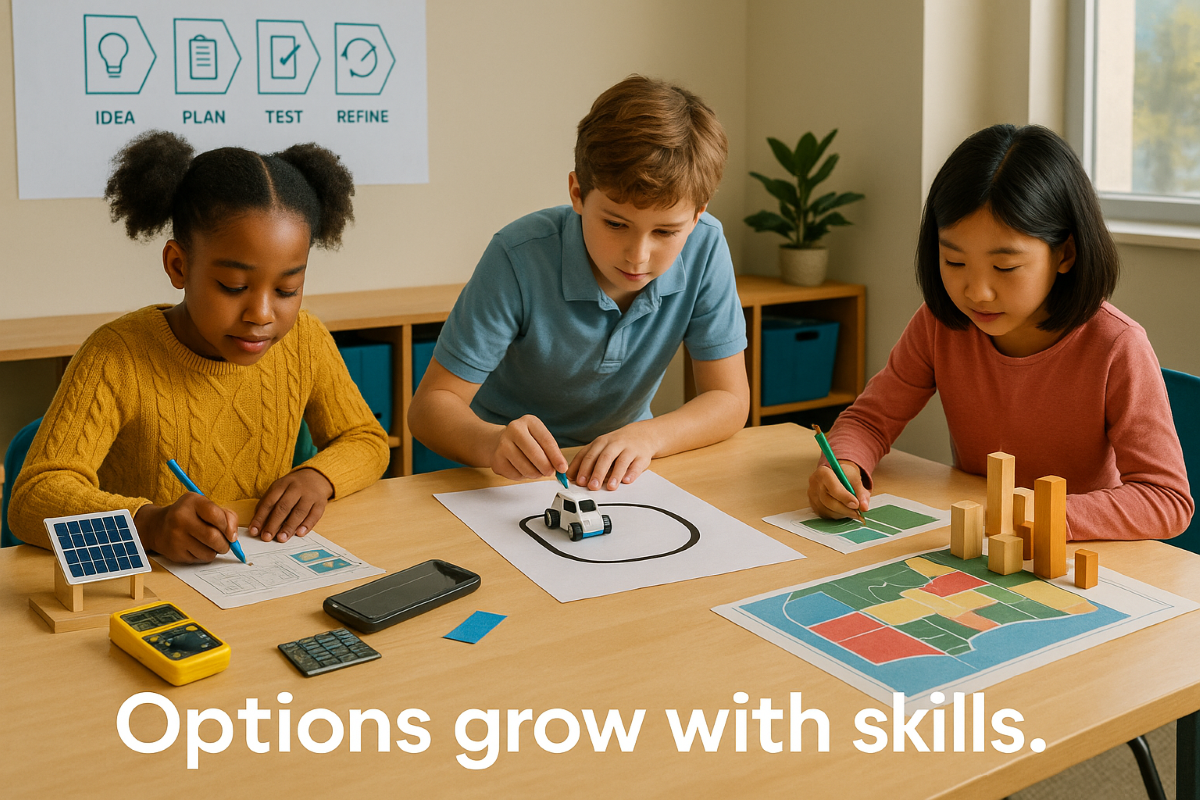 When children see themselves as creative and mathematical, more doors open:
- They try advanced courses because they believe they belong.
- They lead team projects because they can organize ideas.
- They propose solutions because they trust their judgment.
- They handle setbacks because they’ve practiced iteration.
This is not wishful thinking. It’s a skill set we build, day by day, challenge by challenge.
ISA’s Commitment
 Impact STEAM Academy exists to prepare elementary-age students for tomorrow by blending Science, Technology, Engineering, Art, and Mathematics into meaningful, hands-on experiences. Every month, our students tackle open-ended, real-world challenges shaped by a science theme. They apply the engineering design process—ask, imagine, plan, create, improve—as a shared language for problem solving. They collaborate. They communicate. They think critically. And they create.
Most important: we equip and challenge students to reach their unique potential. Some will fall in love with robotics. Others will discover joy in data storytelling or environmental design. All will learn that creativity and math aren’t rivals. They’re teammates.
A Final Word To Parents
If your child says, “I’m just not a math person,” don’t rush to correct the sentence. Change the story.
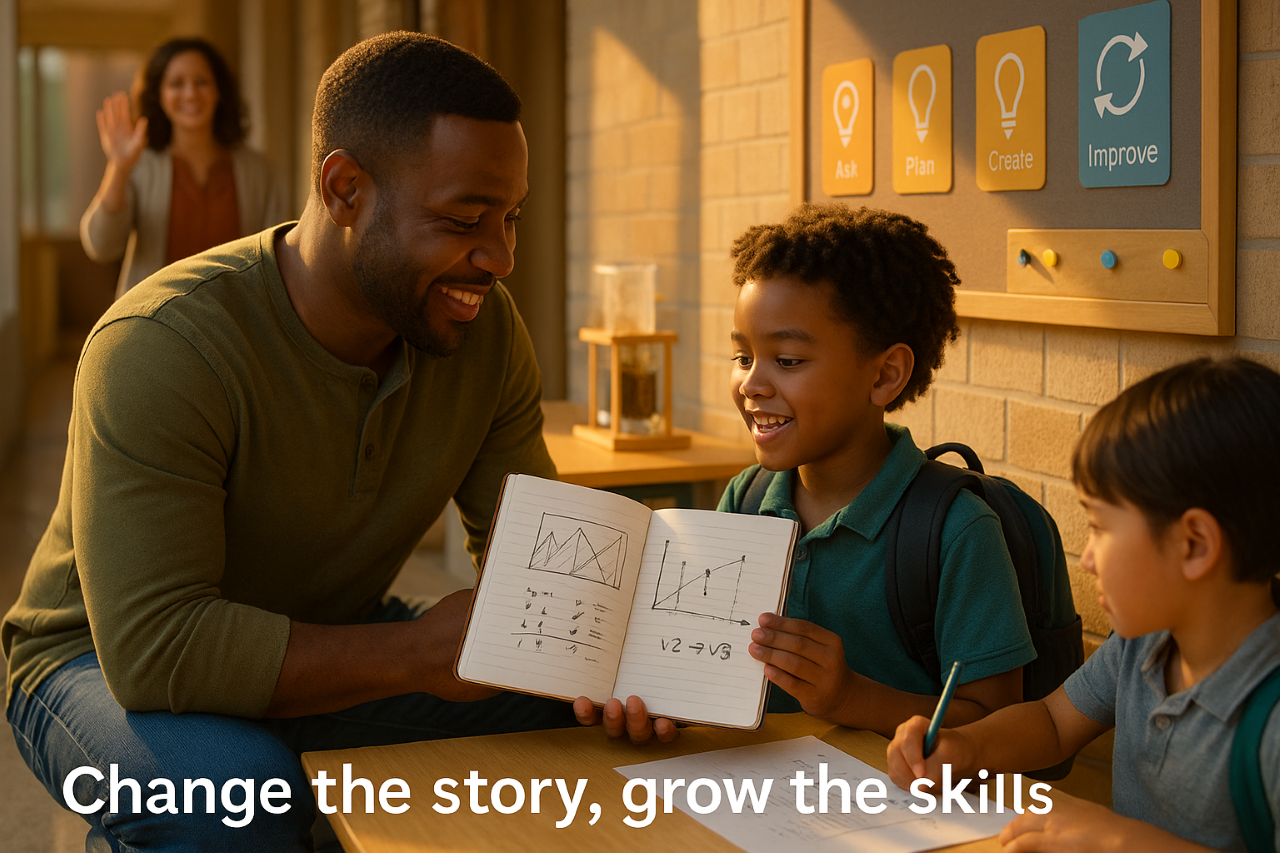 Show them that math is a way of thinking, not a label. Offer them spaces where questions are welcomed, attempts are celebrated, and improvement is expected. That’s what we provide at ISA.
Creativity and math do mix. In fact, they multiply. Together, they produce curiosity, confidence, and competence—the exact trio your child needs to excel in school and in life. If that sounds like the education you want, come see a session. Watch a child light up when their idea works—not because they guessed, but because they reasoned. That moment is why we do this. And it might be the moment that changes how your child sees learning forever.
What do you like about ISA's method for math?