The 6 Things You Need to Know About How Nutrition Affects Learning
A practical ISA report for parents who want their child to focus better, think clearer, and love learning again.
Impact STEAM Academy (ISA) exists to prepare elementary students for the careers of tomorrow through hands-on, project-based experiences in Science, Technology, Engineering, Art, and Mathematics.
In our labs and maker spaces, we see something every week that research has confirmed for years: when children are fueled well, they learn well. Attention lasts longer. Frustration drops. Teamwork improves. Curiosity returns.
This report translates the science into simple steps you can use at home—no fancy diets, just common-sense moves that help your child’s brain do its best work.
Below are the six essentials every parent should know, paired with quick actions you can try this week. We’ll also show how ISA weaves these habits into the engineering design process—Ask → Imagine → Plan → Create → Improve—so your child hears the same message at home and in our program.
1) Steady Energy Beats Quick Energy
Why it matters: The brain uses a steady stream of glucose to power attention and memory. Big sugar spikes (think candy, sweet drinks, and some “breakfast” pastries) feel good for a few minutes, then crash—right when children need to focus. Balanced meals slow digestion and release energy gradually, keeping attention stable during reading, coding, or building challenges.
 What to do at home:
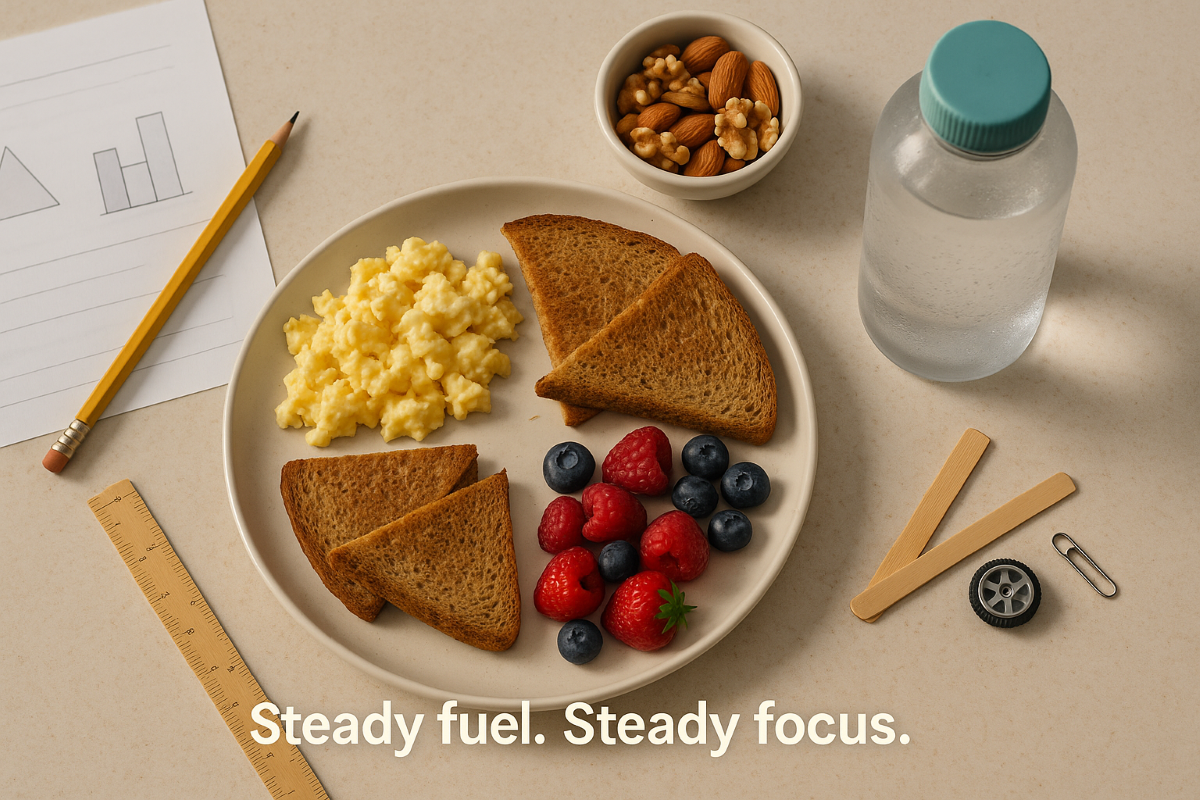
- Build “3-Part Plates”: protein + fiber-rich carbs + healthy fats.
- Examples: scrambled eggs + whole-grain toast + berries; Greek yogurt + granola + banana; turkey/cheese roll-ups + apple slices + carrots and hummus.
- Breakfast counts: If mornings are rushed, prep grab-and-go options the night before (overnight oats, egg muffins, whole-grain wraps).
- Rethink “energy” snacks: Replace fruit gummies and pastries with nuts/seeds, cheese sticks, roasted chickpeas, or a small PB&J on whole-grain bread.
How ISA reinforces it: In design challenges, we call these “slow fuel builds.” Students observe their own focus across a session after different snack choices and chart the results—like mini scientists.
2) Hydration = Better Thinking (and Better Mood)
Why it matters: Even mild dehydration can reduce attention, slow problem-solving, and increase headaches and irritability. Kids are often active before and during after-school time, so their brains need more fluids than they realize.
 What to do at home:
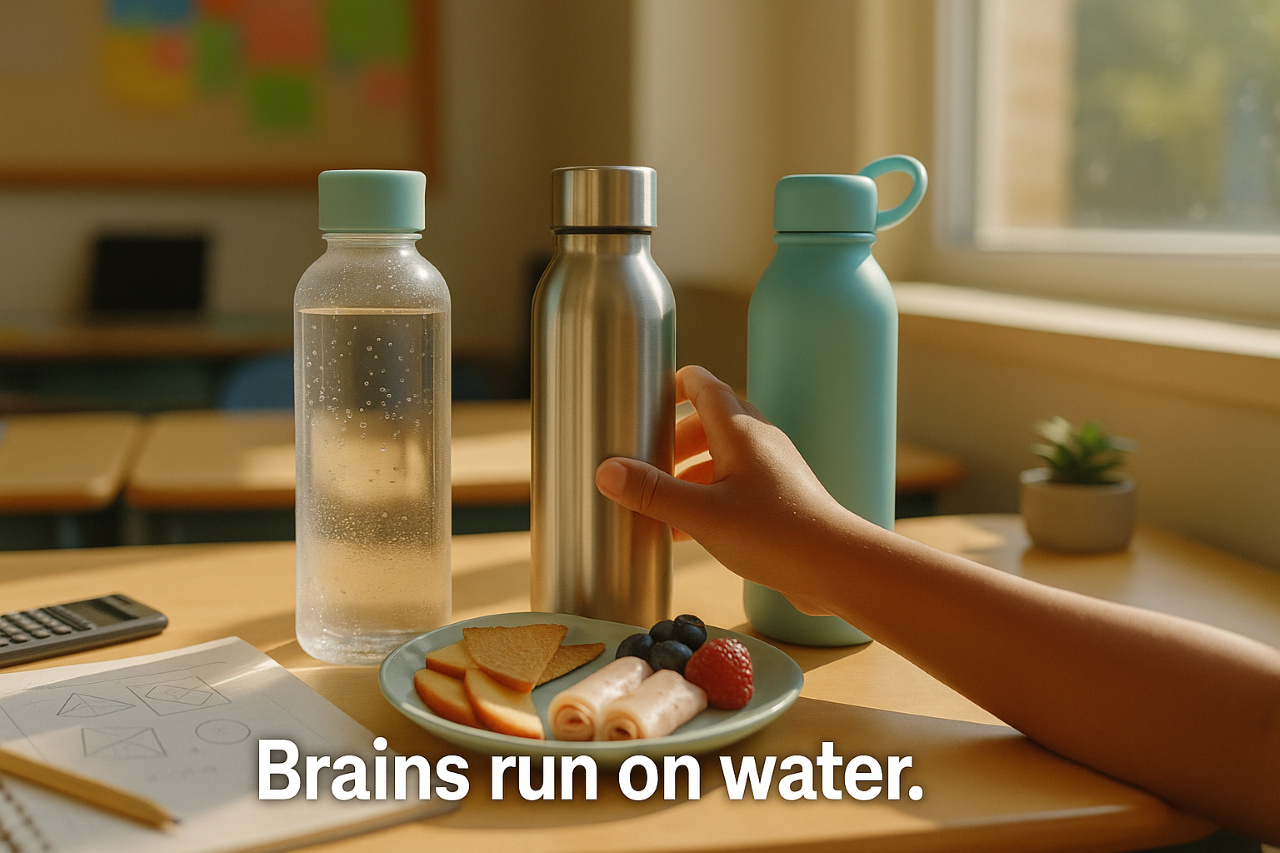
- Water first: Send a labeled water bottle your child likes using. Encourage a full refill before ISA or homework time.
- Add natural flavor: If plain water is a struggle, try slices of citrus or berries.
- Watch the “sneaky dehydrators”: Caffeinated or very sugary drinks can backfire. If offering juice, dilute it (half juice, half water).
How ISA reinforces it: We build “hydration checkpoints” into longer challenges, just as engineers set system checks. Students track refills like a mini data log.
3) Micronutrients Are Brain Tools—Iron, Iodine, B-Vitamins, Omega-3s & Vitamin D
Why it matters:
- Iron supports oxygen delivery to the brain; low intake can sap energy and attention.
- Iodine and B-vitamins aid memory and mental processing.
- Omega-3s (DHA/EPA) help with neuron structure and signaling.
- Vitamin D plays a role in mood and overall brain health.
 What to do at home:
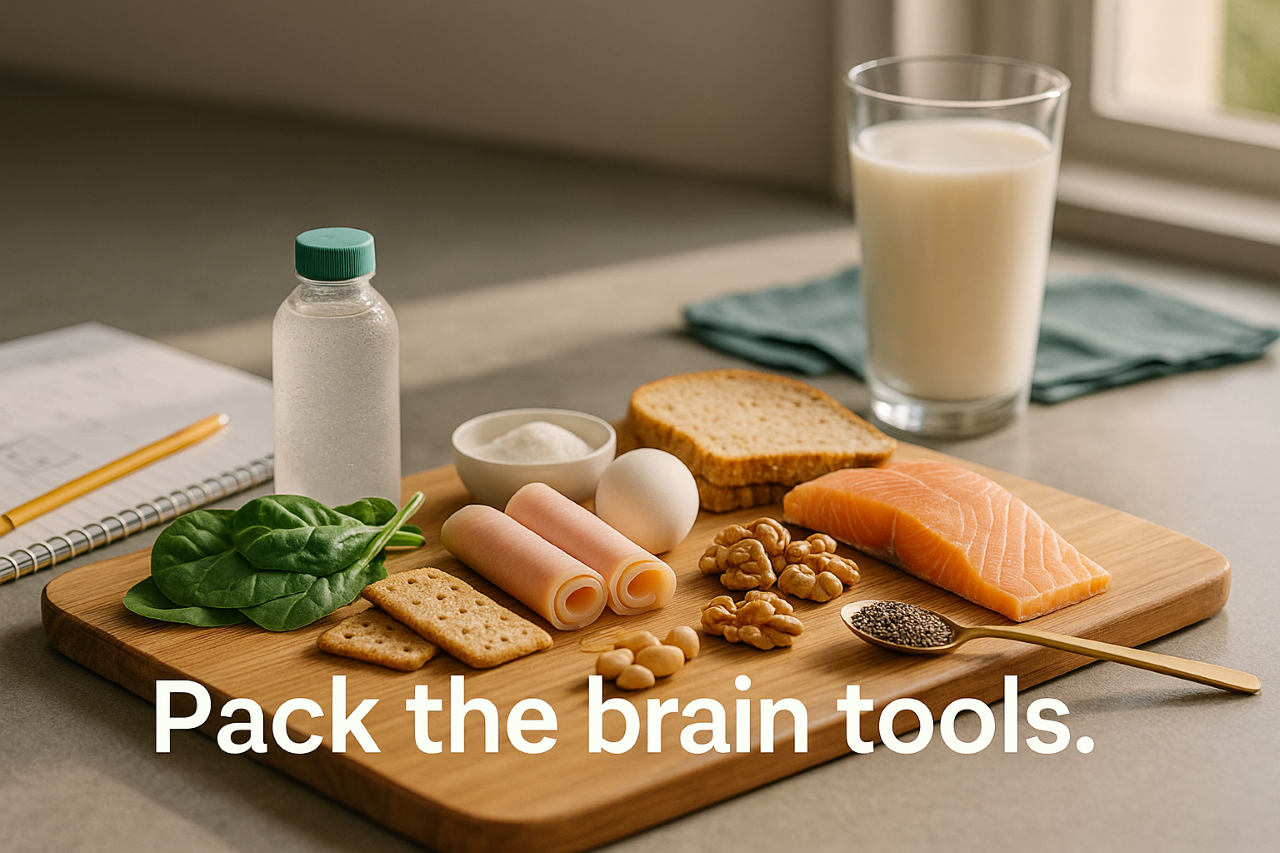
- Iron: lean meats, beans, lentils, spinach (pair with vitamin C foods like oranges or tomatoes for better absorption).
- Iodine: iodized salt, dairy, eggs, fish.
- B-vitamins: whole grains, eggs, dairy, legumes.
- Omega-3s: salmon, sardines, tuna; for plant-forward families, flaxseed, chia, walnuts, or fortified foods.
- Vitamin D: safe sunlight, fortified milk, eggs, or talk to your pediatrician about options if levels are low.
How ISA reinforces it: During our “Human Systems” themes, students build brain-cell models and label which nutrients act like “materials” and “messengers.” This turns lunchbox choices into a concrete, engineering-style parts list.
Note: If you suspect a deficiency (constant fatigue, pallor, frequent headaches), consult your child’s healthcare provider. Nutrition supports learning, but medical guidance matters.
4) The Gut–Brain Connection Is Real
Why it matters: The digestive system and the brain communicate constantly. Fiber and a diverse diet help maintain a healthy gut microbiome, which influences mood, focus, and resilience to stress—especially during group projects and public presentations.
 What to do at home:
- Aim for fiber variety: fruits, vegetables, beans, lentils, oats, whole-grain breads and tortillas.
- “Color Count” game: invite your child to eat at least three colors of plants a day (blue/purple counts!).
- Probiotic/fermented foods: yogurt with live cultures, kefir, or small amounts of sauerkraut/pickles (as tolerated).
- Go slow: increase fiber gradually and pair with more water.
How ISA reinforces it: In our “Food Science” projects, students plan snack experiments using the design process: Ask (What helps me feel steady?), Imagine (possible snack combos), Plan (ingredients), Create (taste test + learning session), Improve (adjust based on how they felt and focused).
5) Sugar and Ultra-Processed Foods Can Disrupt Behavior and Focus
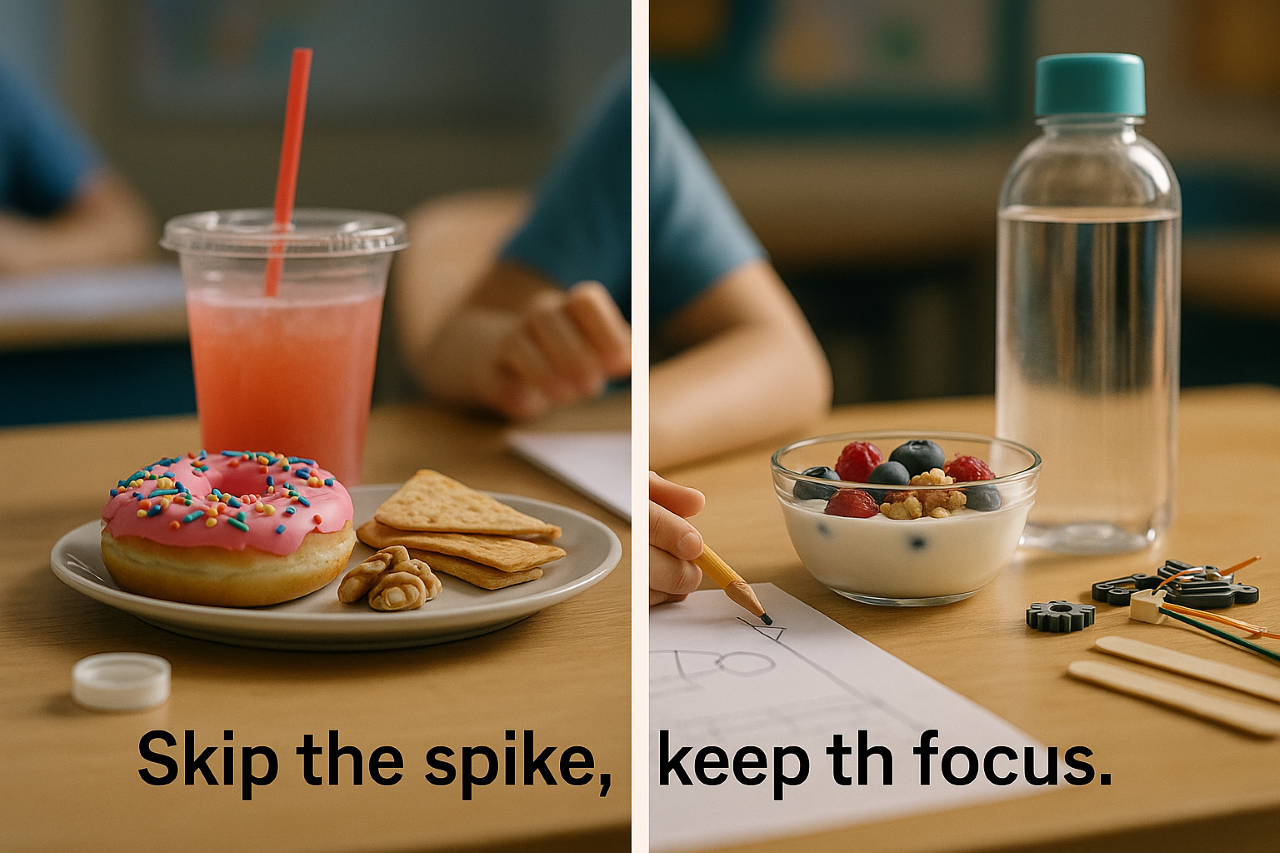
Why it matters: Highly processed snacks often combine fast sugars with artificial flavors and very little fiber or protein. That recipe can drive quick spikes and dips in energy, making it harder to sit, listen, and persist through multi-step tasks.
 What to do at home:
- Check the first three ingredients: If sugar is high on the list and there’s little protein or fiber, save it for occasional treats.
- Sweet swaps: fresh fruit, homemade trail mix, dark-chocolate chips with nuts, air-popped popcorn.
- Timing matters: If a treat is on the menu, pair it with a meal or protein food to blunt the spike.
How ISA reinforces it: When teams hit a focus slump, we pause to discuss “systems tuning.” Students reflect: Was it the task, the snack, the hydration, or the break schedule? That metacognition turns nutrition into a lever they can control.
6) Timing Your Fuel Around Learning Sessions
Why it matters: Just like athletes fuel before practice, learners benefit from predictable “study fuel.” Too little food can cause distraction; too much or too heavy can make kids sluggish. The goal is to arrive at learning with steady energy and leave with energy to spare.
 What to do at home:
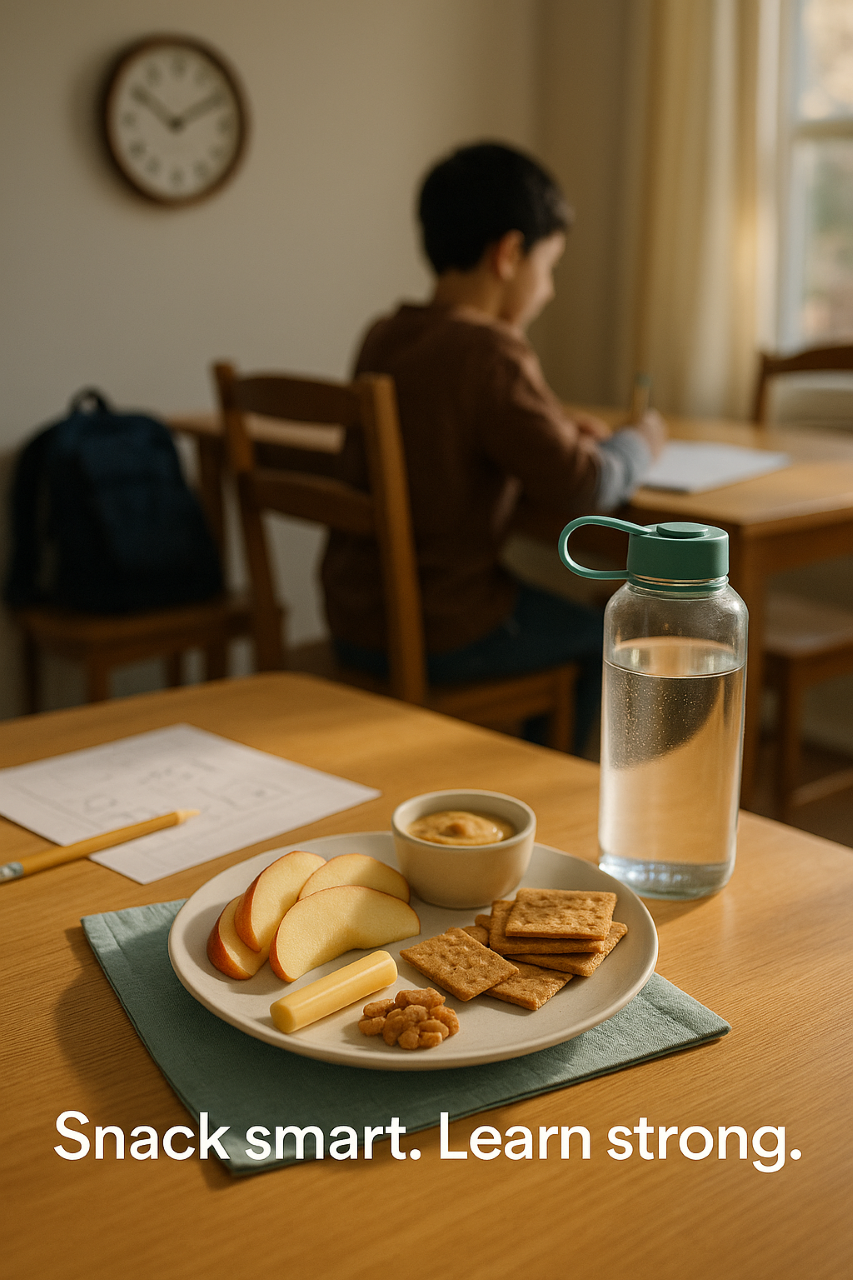
- Pre-learning snack (30–60 minutes before): small protein + fiber-rich carb (apple + peanut butter; cheese + whole-grain crackers; yogurt + fruit).
- During long sessions (90+ minutes): water breaks; optionally a small, simple snack if needed (banana, granola bar with >3g fiber and some protein).
- After learning: balanced dinner to replenish and support growth.
- Protect sleep: Late, sugary snacks can disrupt rest. Aim for a calm, consistent bedtime snack if needed (warm milk, banana, oatmeal).
How ISA reinforces it: We time snacks between phases of the engineering cycle. Students notice how the “Improve” stage feels easier when energy is steady and thinking is clear.
Quick-Start ISA Parent Checklist (Use it this week)
- Send a water bottle and set a “refill once before ISA” routine.
- Pack a 3-Part Snack (protein + fiber-rich carb + healthy fat).
- Add one iron or omega-3 food to dinner twice this week.
- Play the Color Count game—three plant colors a day.
- Reserve big treats for after focused learning, paired with protein.
- Track your child’s focus for three days (1–5 scale) based on snack, hydration, and bedtime; adjust.
Sample ISA-Aligned Snack Matrix
- Build & Design Days (hands-on, longer focus): turkey/cheese roll-up + grapes + pretzels; yogurt + granola + sliced strawberries.
- Presentation/Collaboration Days (communication, confidence): hummus + baby carrots + pita; apple slices + peanut butter; trail mix (nuts/seeds + a few chocolate chips).
- Coding/Math Days (quiet concentration): cheese stick + whole-grain crackers; banana + sunflower seeds; oatmeal cup with cinnamon.
How Nutrition Fits ISA’s Mission
ISA’s purpose is to equip and challenge students to reach their unique potential. That potential grows when the brain has reliable materials to build with, clear signals to learn from, and enough energy to persevere through struggle.
Good fuel doesn’t guarantee perfect behavior or instant A’s, but it removes an unnecessary barrier. It gives your child a fair chance to discover they can love learning—and that their choices help make it happen.
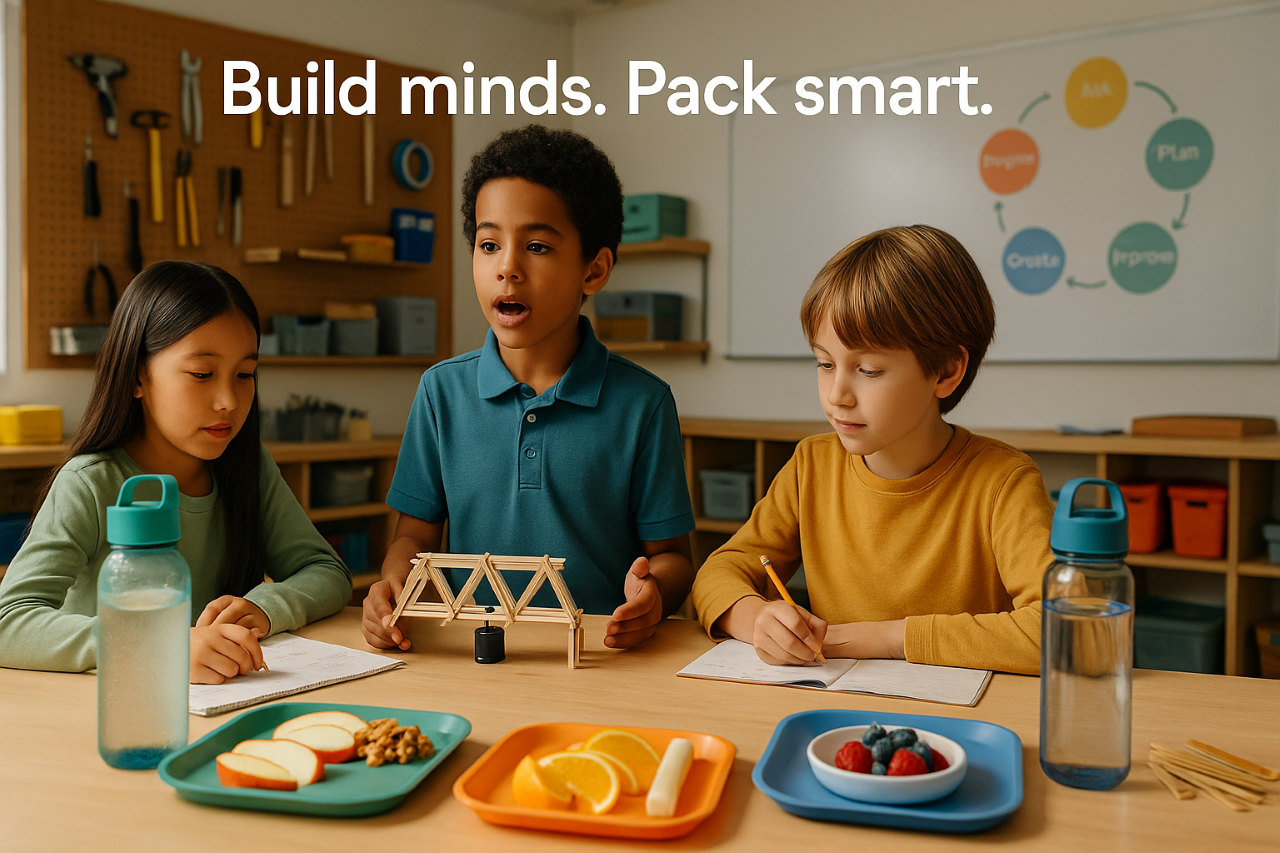 If your child struggles with motivation, start with the lowest-effort wins: a bottle of water, a steadier pre-learning snack, and earlier lights-out. Then use the engineering design cycle together:
1. Ask: When does learning feel easy/hard? What did I eat/drink?
2. Imagine: What snack or hydration change might help?
3. Plan: Choose two realistic tweaks for the week.
4. Create: Try them during homework and ISA days.
5. Improve: Keep what worked. Adjust what didn’t.
That’s science at home—simple experiments that make school days smoother and STEAM time more joyful. And when your child starts connecting better fuel with better outcomes (“I answered more questions today!”), motivation begins to shift from the inside out.
Want help getting started? Ask your child to pick one snack from the matrix, fill a water bottle, and rate their focus after ISA this week. Bring their notes to our next session—our coaches love turning small wins into big momentum.
How do you think nutrition affects your child?